Cambridge C2 Proficiency Writing:
A process you can rely on
Overview
This course is designed to help candidates preparing for the Cambridge C2 Proficiency exam develop the skills, strategies and confidence needed to succeed in the Writing paper.
Many candidates preparing for C2 Proficiency already have a very high level of English. Success in the Writing paper depends not only on language proficiency, but also on the ability to use that language with precision and flexibility across a range of demanding tasks.
Throughout the course, participants will develop the skills, judgement and confidence to approach the Writing paper through a process they can rely on under exam conditions.
This course is suitable for:
Candidates preparing for the Cambridge C2 Proficiency exam;
Learners with an advanced command of English who want to refine their writing;
Teachers of English preparing for the C2 exam;
Candidates who want to write with greater precision, flexibility and control under exam conditions.
What you'll develop
By the end of the course, participants will be able to:
Understand and respond effectively to all task types in the C2 Proficiency Writing paper;
Apply a clear and reliable process for planning and structuring exam answers;
Improve coherence and cohesion through better organisation of ideas and linking strategies;
Develop precision in language use to express ideas more clearly and appropriately;
Adapt register, tone, and style according to task requirements;
Approach writing tasks with greater confidence, control, and awareness of exam expectations.
What participants have said about the course:
"You can expect lots of meaningful conversations, a fully dedicated teacher, as Leandro is trully committed to our development, a very friendly environment, and of course, lots of opportunities to learn exam strategies, vocabulary (especially C2 level linking words) and grammar structures that will level up your writing!" — Leila Neves (English teacher)
"I found the materials thoughtfully designed and well-sequenced. Each lesson built on the previous one in a clear, purposeful way, allowing me to internalise structures and strategies gradually rather than feeling rushed. The balance between input (models, analysis, noticing tasks and exchanging with my colleagues) and output (writing practice, guided production and the independent tasks) was particularly effective. I also appreciated how the activities encouraged reflection rather than simple completion.
There was a strong focus on developing awareness of genre, register and audience, which helped me write more intentionally. That also helped me work on effective ways to tackle the assignments. The variety of tasks, warm-ups, analysis, drafting, rewriting, outlining, summarizing, etc made the lessons truly engaging and made this experience feel cohesive.
I felt the course was well organised, responsive to my needs, and consistently supportive. All the feedback provided was constructive, detailed and actionable, which made a meaningful difference in my progress." — Heloísa Andrade (English teacher)
Teaching Approach
The course is based on the belief that writing is not simply a talent, but a skill developed through guided practice, feedback, and reflection.
Students are supported through:
Structured input on task types and strategies;
Guided writing practice with clear frameworks;
Feedback focused on both accuracy and task effectiveness;
Opportunities to develop and repeat a reliable writing process;
A supportive learning environment where improvement is gradual and measurable.
Each lesson combines discussion, guided analysis, focused practice and feedback.
Sometimes we'll analyse a model text, identify examples of useful language and discuss the decisions the writer has made to communicate effectively.
At other times, we'll examine recurring patterns in participants' writing and work on the specific skills that need further development.
Conclusion
The Cambridge C2 Proficiency Writing paper asks candidates to make a series of thoughtful decisions under exam conditions.
This course is designed to help you develop the judgement, confidence and reliable process needed to approach those decisions more effectively.
Practical information:
The information below outlines how the course is organised and what you can expect throughout the programme.
Start date: 12 August, 2026
End date: 2 December, 2026
Duration: 15 weeks
Format: Online (Zoom)
Live sessions on Wednesdays, from 7.30 p.m. to 9.00 p.m. (BRT/GMT-3)
Calendar:
August: 12, 19, 26
September: 2, 9, 16, 23, 30
October: 7, 21, 28
November: 4, 11, 25
December: 2
No live lessons on:
16 October: mid-semester break
18 November: scheduled break
Course programme:
Throughout the course, we'll work on all text types included in the C2 Proficiency Writing paper: the essay (Part 1) and the report, article, review, and letter/email (Part 2).
In the final lesson, participants will complete a full Writing paper under exam conditions, providing an opportunity to apply the skills and process developed throughout the course.
Additional Information
Group size: 3–6 participants
Materials: All course materials will be shared via Google Classroom. A Gmail account is required for access.
Recordings: If you're unable to attend a live session, you'll receive access to the recording for seven days so you can catch up before the next class.
Self-study: To benefit fully from the course, participants should expect to spend approximately two hours per week on course-related work outside the live sessions.
The tutor
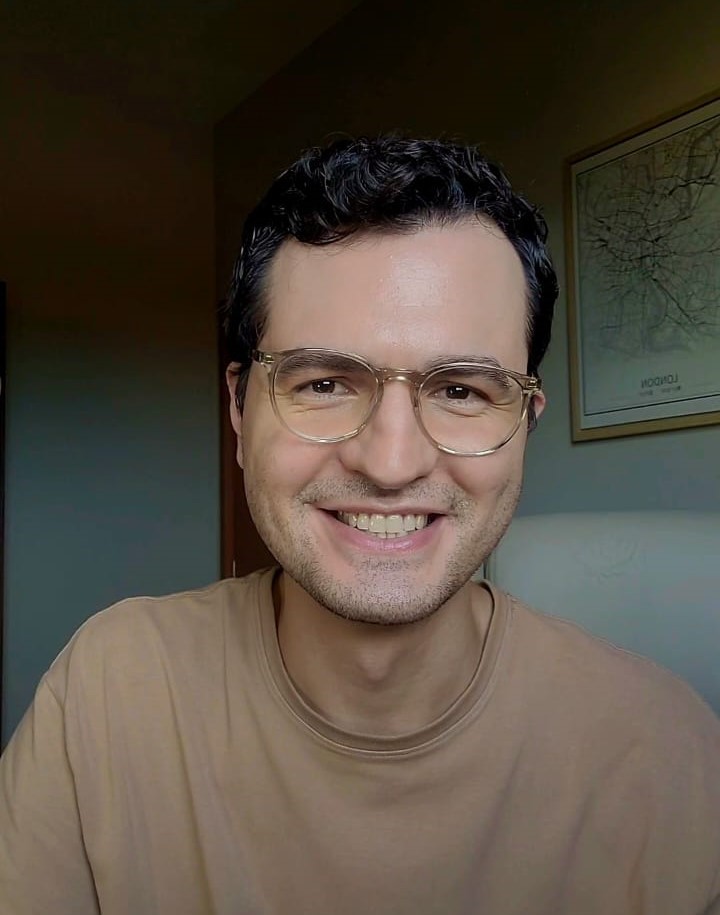
I've been teaching English for over 15 years, with a particular focus on Cambridge English qualifications (B2 First, C1 Advanced and C2 Proficiency), writing, and language development for teachers.
I hold a degree in Languages from UNESP, the Cambridge C2 Proficiency, CELTA, TKT (Modules 1, 2 and 3), and the Trinity CertPT qualification. These experiences have shaped my teaching, and my work with learners over the years has continually refined the way I think about writing.
My aim is to help people develop the judgement, confidence and skills to approach writing with a process they can rely on.
When I'm not teaching, you'll probably find me enjoying a coffee and a pastry at the nearest café, drafting my next article, or rewatching one of my favourite films.